Profile
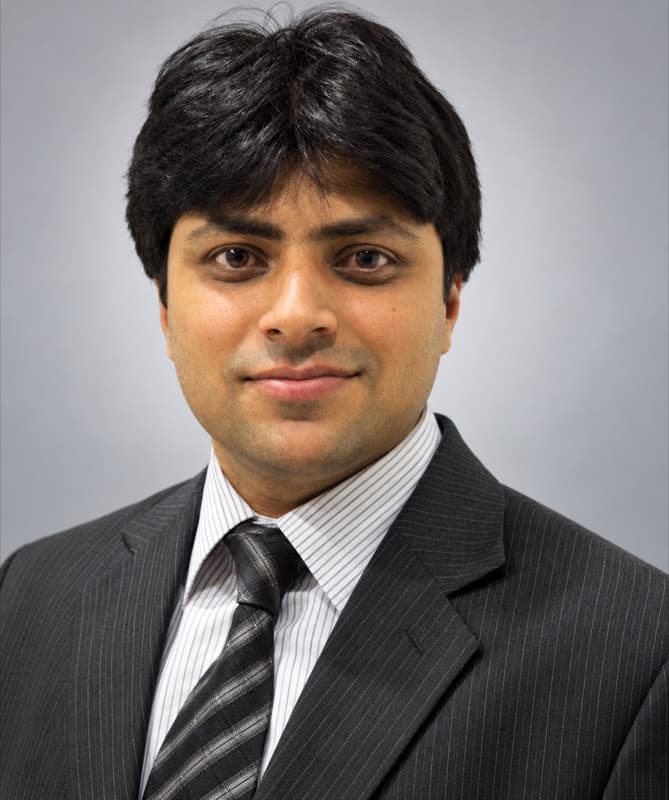
Dr Zahid Mehmood has developed an influential research career in computer engineering, with artificial intelligence as the connecting theme across his work, linking core computer-engineering methods with challenges in healthcare, visual analysis and digital forensics.
Research journey
He earned his PhD in Computer Engineering from the University of Engineering and Technology Taxila, completing the degree in 2016 with a research focus in artificial intelligence. His academic journey has remained closely connected to UET Taxila, where he contributes to teaching, research supervision and the development of applied computing research in the Department of Computer Engineering.
His early work focused on image processing, content-based image retrieval and computer vision. Over time, this foundation expanded into deep learning, medical image analysis, image and video forensics, pattern recognition and intelligent diagnostic systems — a consistent effort to move from visual feature engineering towards data-driven models capable of supporting complex real-world decisions.
Research contribution and impact
Dr Mehmood has produced 126 scholarly publications and holds an h-index of 46. His research portfolio includes influential work on automated diagnosis and multi-class classification of Alzheimer disease stages using resting-state functional magnetic resonance imaging and residual neural networks. His wider work explores brain disease classification, medical image processing, image annotation, multimedia retrieval, forensic analysis and machine-learning models for health and engineering applications.
A defining strength of his research is its interdisciplinary character. By combining computer vision, deep neural networks and medical imaging, he has helped translate advances in artificial intelligence into tools for disease detection and clinical decision support. His contributions also address the reliability, interpretation and practical deployment of intelligent image-analysis systems.
Recognition
Dr Mehmood has been recognised by UET Taxila among the scientists included in Stanford University and Elsevier based global rankings of the world’s top 2 percent researchers. The university has also highlighted his standing among the top 1 percent of computer scientists on ResearchGate.
Areas of expertise
- Artificial intelligence and machine learning
- Deep learning and neural networks
- Computer vision and image processing
- Medical imaging and intelligent diagnosis
- Image and video forensics
- Content-based image retrieval and image annotation
- Pattern recognition and multimedia analysis
In the network
Dr Zahid Mehmood represents a research journey shaped by technical depth, sustained publication activity and the practical application of artificial intelligence. Through research, teaching and supervision at UET Taxila, he continues to contribute to the next generation of intelligent systems and researchers.
Research metrics verified September 2026 and may change as new work is published and cited.