Profile
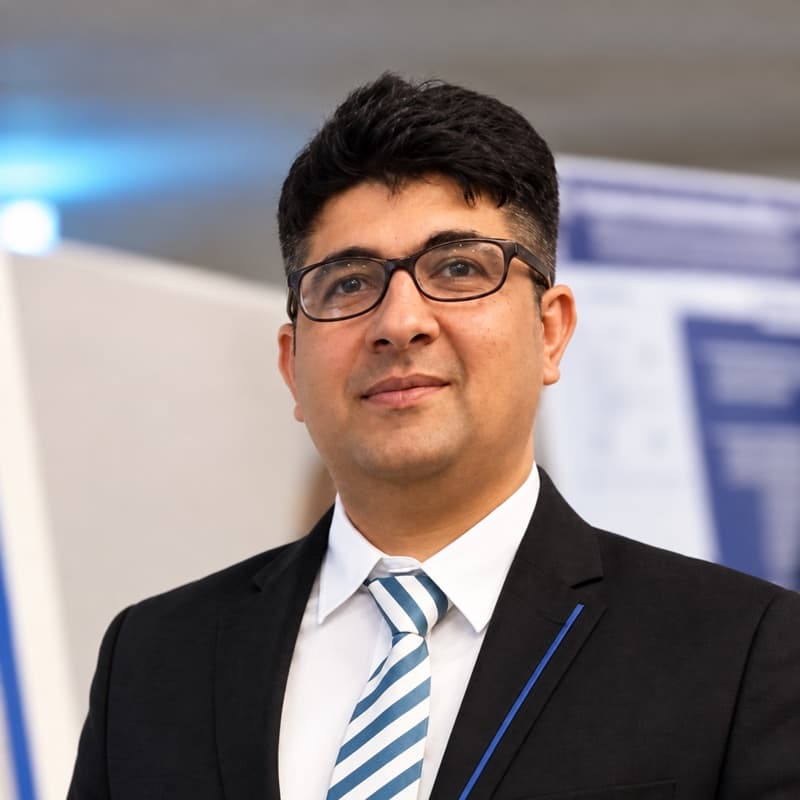
Dr Benyamin Khoshnevisan is an Associate Professor in the Department of Green Technology at the University of Southern Denmark, where he contributes to SDU Life Cycle Engineering and the SDU Climate Cluster. His research evaluates how technologies, products and systems can support circular, climate-neutral and resource-efficient societies. He leads the LCE SMART Research Team, connecting sustainability assessment with data-driven decision support.
Research journey
His research journey began in biosystems engineering at the University of Tehran, where he developed expertise in energy use, agricultural production and environmental performance. His early studies examined energy consumption and greenhouse-gas emissions in crop and greenhouse systems, applying life-cycle assessment, data envelopment analysis, optimisation and machine-learning methods to identify more efficient production pathways.
Over more than a decade, Dr Khoshnevisan expanded this foundation into the sustainability assessment of renewable-energy systems, biofuels, biorefineries, waste management, wastewater treatment and bio-based production. His work increasingly integrated environmental assessment with techno-economic analysis and multi-criteria decision analysis, enabling decision-makers to compare environmental benefits, costs, technological readiness and wider social considerations.
Research contribution and impact
At the University of Southern Denmark, his research has progressed toward circular bioeconomy systems, Safe and Sustainable by Design, Product Environmental Footprint methods and prospective sustainability assessment. He contributes to major collaborative projects involving marine biomass, sustainable biorefineries, bio-based materials, circular agriculture, green extraction technologies and the recovery of value from waste streams.
His current work explores digitalisation, artificial intelligence, digital twins and automated environmental-footprint tools. By combining life-cycle thinking, sustainability modelling, data mining and optimisation, he aims to provide robust guidance while technologies are still being designed — when evidence is limited and early decisions can have the greatest long-term environmental and economic consequences.
Areas of expertise
- Life cycle assessment
- Techno-economic assessment
- Circular economy and bioeconomy
- Renewable energy and biofuels
- Waste and wastewater systems
- AI-assisted sustainability modelling
In the network
With more than 130 research publications and a Google Scholar h-index of 54, Dr Khoshnevisan has established a substantial international record in sustainability and environmental engineering, bringing together environmental, economic and social evidence to help researchers, industry and policymakers design technologies that are both technically viable and genuinely aligned with circular and climate-neutral development.
Bibliometric values change over time; figures verified September 2026 from Google Scholar.